

Japan Is Raising the Bar for Certified Pangasius. Here’s What’s Actually Changing
Beyond frozen fillets, the conversation among Japan’s pangasius buyers is increasingly about consistency, supplier capability, and value-added product development.
This article explains the three shifts shaping Japan’s pangasius buying logic in 2025-2026, and how VDTG Food aligns its operations and product development to those requirements.
Japan Pangasius Market Overview: Where Growth Is Actually Happening
Japan’s whitefish market is under pressure from tightening quotas on wild species such as pollock and cod, which is pushing processors, foodservice groups, and retailers to seek reliable farmed alternatives. In this context, pangasius has moved from a niche import to a core whitefish option in Japan.
Key signals from 2025-2026:
- Vietnam’s pangasius exports to Japan reached USD 34 million in the first nine months of 2025, up 14% year on year, with September alone up 12%.
- Frozen pangasius fillets remain the main product, at nearly USD 30 million in the first nine months of 2025, up 11%.
- Value-added pangasius (processed products) grew by around 47% in the same period, while other fresh/frozen whole and cut products grew by 39%, showing a clear shift toward more complex SKUs.
- Looking at processed products specifically, the export value of value-added pangasius to Japan in 2025 was estimated at nearly USD 5 million, up about 70% compared with 2024, indicating strong acceptance of convenience formats.
In Japan’s whitefish consumption structure, pangasius fillets now rank just behind Alaska pollock fillets and are increasingly used in food processing, restaurant chains, and retail. At the same time, buyers are differentiating among suppliers: they want partners who can deliver not only volume, but also certified, traceable, and format-diverse products.
Traceability Is Now Part of the Japan Sourcing Conversation
For Japanese buyers, traceability is no longer a “nice-to-have”. It is part of the standard sourcing checklist: certified farms, monitored water and fish health, residue control, and full documentation from stocking to shipment.
That is exactly how VDTG Food structures our pangasius supply chain:
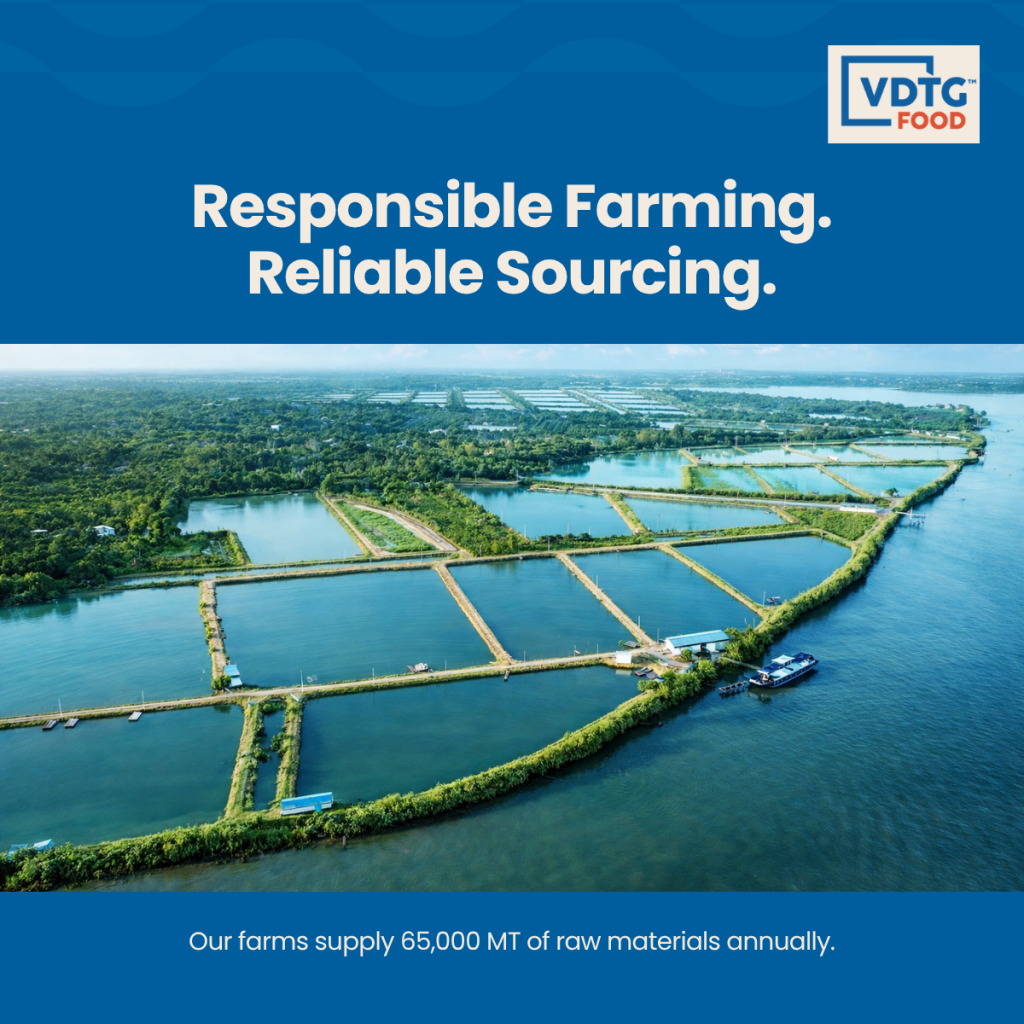
- Pangasius sourced from ASC and BAP certified farming operations.
- Farm-level data on water quality, fish health, and residue control maintained from stocking to harvest.
- Traceability records kept from farm through processing to shipment, aligned with the type of documentation Japanese buyers increasingly expect.
This turns traceability from a vague promise into a usable asset for buyers managing their own quality and compliance requirements in Japan.
Consistency Is What Turns a Trial Into a Programme
A strong product sample gets a supplier in the room. It solves exactly half the problem. The other half is making sure the fillet a buyer approved in trial is still the fillet that ships on order five hundred.
When consistency drifts, it rarely announces itself with one dramatic failure. It shows up quietly: a private label listing pulled after two off-spec batches, a kitchen adjusting cook times because a portion size shifted, a buyer quietly paying to re-test a supplier it had already signed off on.
VDTG Food’s processing facility handles 350 MT of raw materials a day, combining automation, trained operators, and standardized HACCP procedures to hold spec from the first batch to the last. That includes a dedicated automatic breading line producing 1.5 tons an hour, built specifically for customer-specific coated products.
For buyers, that’s what scalability actually means. Not a capacity number on a spec sheet, but the confidence that what got approved in development still performs exactly the same way once a programme is running at volume, market after market, without having to re-litigate the approval every single quarter.

What This Means for Buyers
Three things are happening in Japan’s pangasius market at once, and a buyer evaluating a supplier is effectively weighing all three together:
- Whether farming practices hold up to documented scrutiny (certification, traceability).
- Whether production consistency is provable rather than assumed.
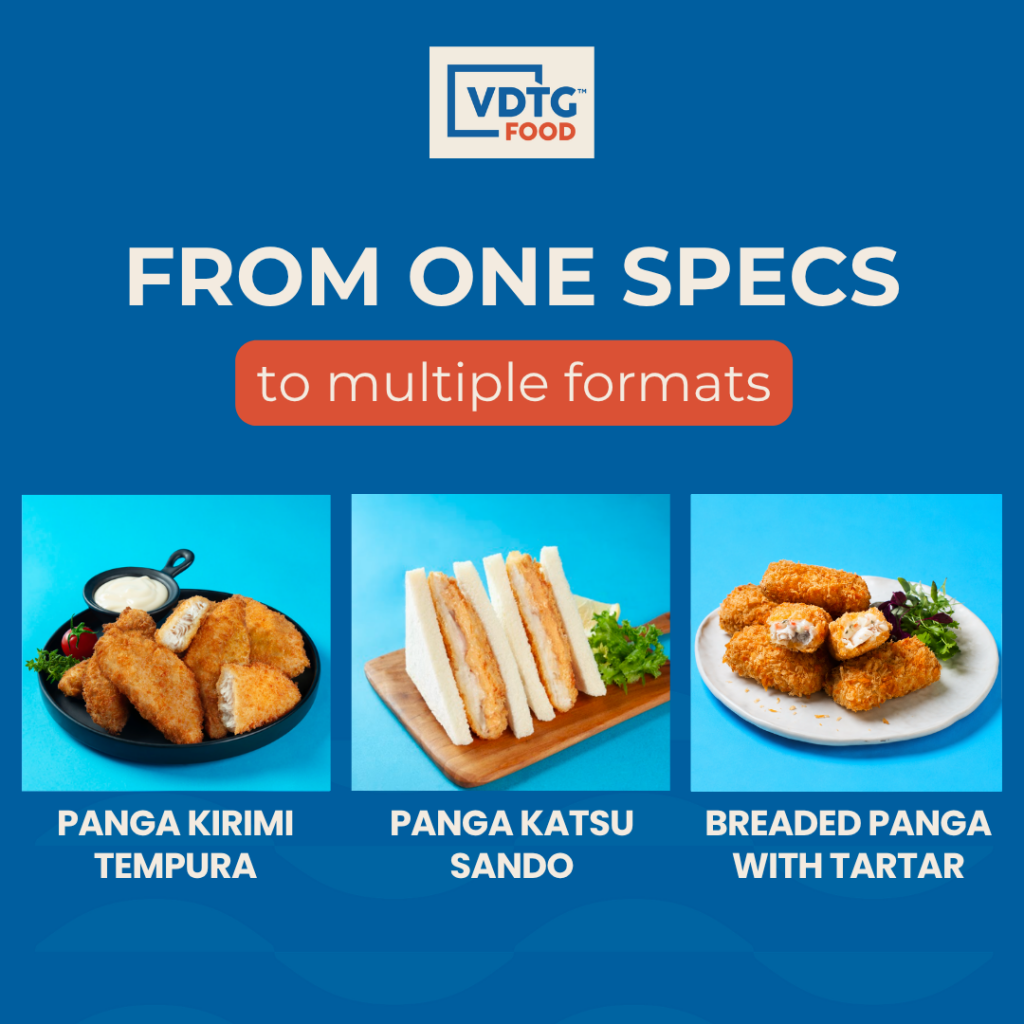
- Whether the same raw material can be developed into the formats a retail, foodservice, or private label range actually needs.
Vietnamese pangasius is no longer evaluated only as a frozen fillet. It’s increasingly recognised as a versatile, value-added raw material capable of supporting differentiated products at commercial scale, provided the supplier behind it can prove those three points.
Ready to Develop Pangasius Products for the Japanese Market?
Whether you’re expanding an existing retail range or developing a new value-added concept for foodservice, our team works closely with buyers to turn market requirements into commercially scalable products.
Let’s discuss your next project, request a quotation or explore how VDTG Food can support your business in Japan. https://vdtgfood.com/contact/
Frequently Asked Questions
VDTG Food processes about 350 MT of raw pangasius materials per day, supported by farming operations producing approximately 65,000 MT of raw material annually.
VDTG Food sources pangasius from ASC and BAP certified farming operations, with traceability records maintained from farm to shipment
Yes. VDTG Food operates a dedicated automatic breading line producing 1.5 tons of coated pangasius per hour, built for customer-specific coatings, flavours, and portion sizes.
VDTG Food develops pangasius fillets and cuts, breaded portions, marinated fillets and skewers, sausages, and ready-to-cook formats, designed for foodservice, retail, and private label programmes.
Yes. VDTG Food works directly with buyers to develop custom coatings, flavours, and formats for private label and foodservice programmes, from initial concept through full commercial-scale production.