
2027 Seafood Planning Has Already Started: 5 Things to Align Before Year-End
For many seafood buyers, 2027 planning has already started. Product briefs are being prepared, sourcing discussions are underway and seasonal programmes are beginning to take shape.
But starting early is only useful if the right questions are being asked early.
For pangasius in particular, the market is already showing why a one-size-fits-all approach will not work.
Vietnam’s pangasius exports reached 1.5 billion USD in the first eight months of 2026, up 10% year on year, but the headline growth masks very different conditions across markets and formats. [1]
For buyers planning 2027 programmes, these differences matter.
The objective is not to predict exactly what the market will look like next year. It is to identify the decisions that can still be made early, before raw material, production capacity, specifications or commercial conditions become constraints.
Here are five areas worth aligning before year-end.
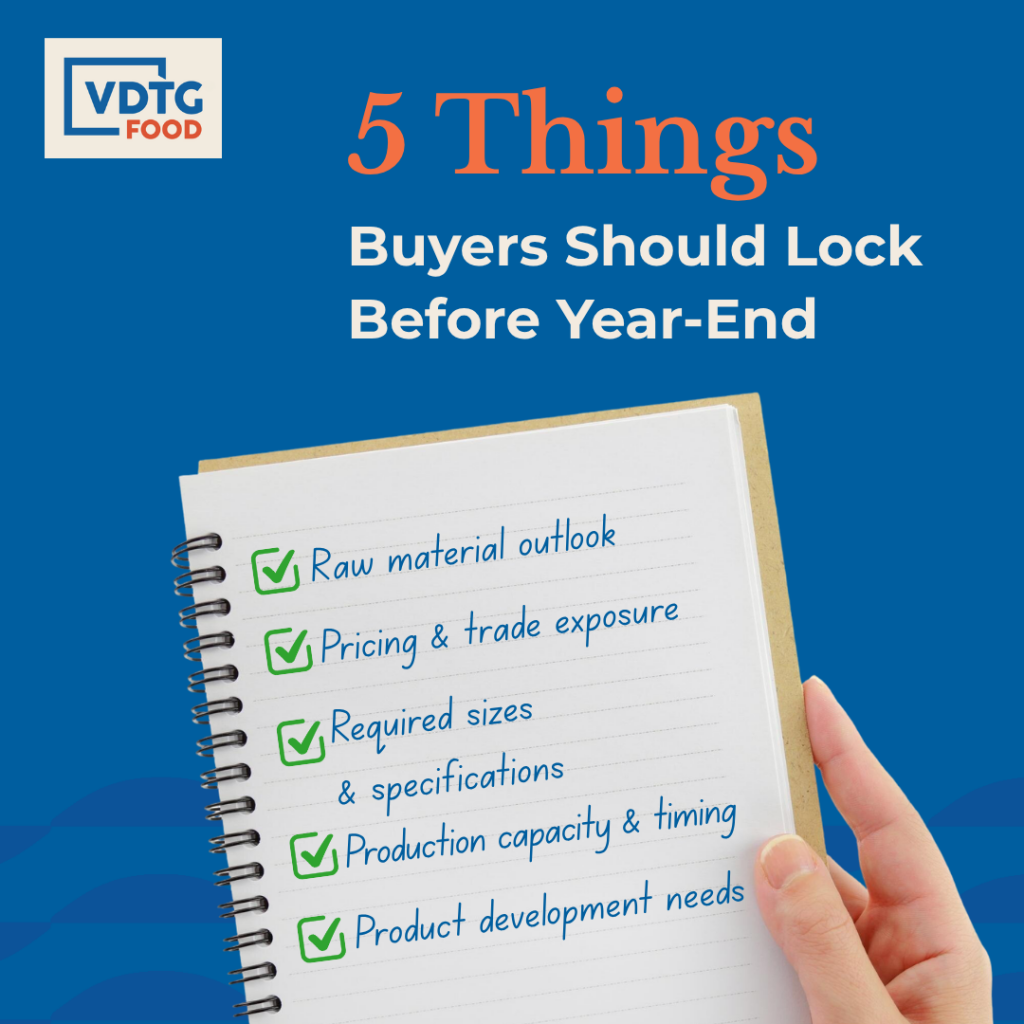
1. Start With the Raw Material You Will Actually Need
A pangasius requirement should not begin with a volume number alone.
Before asking how much supply is available, it is worth asking a more specific question:
What raw material does the product actually require, and when will production need it?
Fish do not remain at one size throughout the farming cycle. As they grow, the raw-material mix available for processing changes. This makes the relationship between target size, production timing and finished-product specification important to discuss early.
The finished product also does not always need to mirror the size of the whole fish.
A larger raw material, for example, may still support smaller finished formats through portioning or further processing. In other words, a buyer looking for a particular finished-product size should not automatically assume that the equivalent whole-fish size is required.
The starting point should be the application, then work backwards to the raw material.
Why this matters now
Raw pangasius conditions have already moved during 2026. In the early months of the year, raw-fish prices in the Mekong Delta were approximately 33,000-34,000 VND/kg, while the industry was simultaneously being cautioned against excessive farming expansion that could create oversupply later in the cycle. [2]
Current raw-material conditions therefore provide useful context, but they are not a substitute for planning the actual size and timing a program requires.
For 2027, the more useful conversation is about the size required, the production timing and how the raw material connects to the finished product.
2. Look Beyond Today’s Price to the Full Commercial Exposure
Price matters. But a quotation is only one part of the commercial picture.
This is especially visible in the U.S., where trade measures, duties and changing market conditions can affect the economics of a program between contracting and delivery. The existing U.S. antidumping order on certain frozen fish fillets from Vietnam also remains in place following its 2026 sunset review. [3]
For buyers, this means a 2027 sourcing discussion should consider more than today’s quoted price. Product classification, applicable duties, logistics and timing all need to be understood alongside the product itself.
Our approach is to bring these variables into the conversation early, so buyers have a clearer view of the program beyond the initial quotation. This also creates more room to adjust specifications, production timing or shipment plans before commercial decisions are locked in.
Price may start the conversation, but planning the full program is what determines whether that price works through to delivery.
3. Define the Specification Before It Becomes a Production Constraint
A request for “pangasius” can describe very different commercial products.
Raw-material size, treatment, glazing, portion weight, shape, coating, packaging and final application can all change what needs to happen in production.
Brazil provides a useful example. Frozen pangasius fillets accounted for approximately 99% of Vietnam’s pangasius export value in the first half of 2026. [4]
That concentration raises a more useful product-development question than simply whether the market can absorb more pangasius:
If buyers already know pangasius primarily as a fillet, what else can the species become?
For VDTG, this is where the conversation moves from species to application. Portion cuts, industrial blocks and further-processed formats create different routes depending on what the finished product needs to achieve.
A U.S. private-label program and a Brazilian foodservice application may both begin with pangasius, but they do not necessarily need the same specification.
That makes specification an early commercial decision, not simply a factory document prepared at the end.
4. Match Volume With the Right Production Window
Knowing that a supplier has capacity is useful.
Knowing when the right capacity is available for your specification is more useful.
Production planning connects several variables: raw-material readiness, order volume, processing requirements, packaging preparation and shipment timing.
The more complex the product, the more important those dependencies become.
A standard frozen fillet program and a coated value-added program do not necessarily follow the same production path. If a product requires shaping, portioning, coating or other further processing, those requirements need to be considered when the production window is being planned.
This is why expected volume, specification, lead time and capacity belong in the same conversation.
For a buyer, the question is not simply:
“Do you have capacity?”
It is:
“Can the required product be produced at the volume and timing our program needs?”
5. Decide Whether You Are Sourcing a Product or Building One
Not every 2027 program needs to begin with a finished SKU.
Sometimes the requirement starts with an application.
A buyer may know the target portion, eating occasion, coating profile, price architecture or packaging format before the final seafood product has been defined.
This is where pangasius industrial block can become relevant.
Rather than treating industrial block as the finished product, it can serve as a raw-material platform for further processing. Depending on the agreed specification and application, the block can move into formats such as planks, portions, fingers, bites, formed products or coated products.
This changes the starting question.
Instead of:
“Which existing product can we buy?”
the conversation can become:
“What product are we trying to build, and what manufacturing route can support it?”
For private-label, retail and foodservice programs, this gives product development a clearer starting point: the market needs first, then the format.
Put the 2027 Program on the Table Early
A forecast is most useful when it leads to a decision.
That planning conversation will look different by market. In the U.S., trade exposure and program economics remain important considerations. In Brazil, a market still heavily concentrated in frozen fillets raises a different question around format and product development.
But the planning principle remains the same:
The earlier VDTG understands what the program needs to achieve, the earlier we can assess how raw material, production and product development can support it.
Planning a 2027 pangasius program? Talk to VDTG team → https://vdtgfood.com/contact/
References
[1] Vietnam’s pangasius exports maintain growth in first eight months, led by China and Brazil